
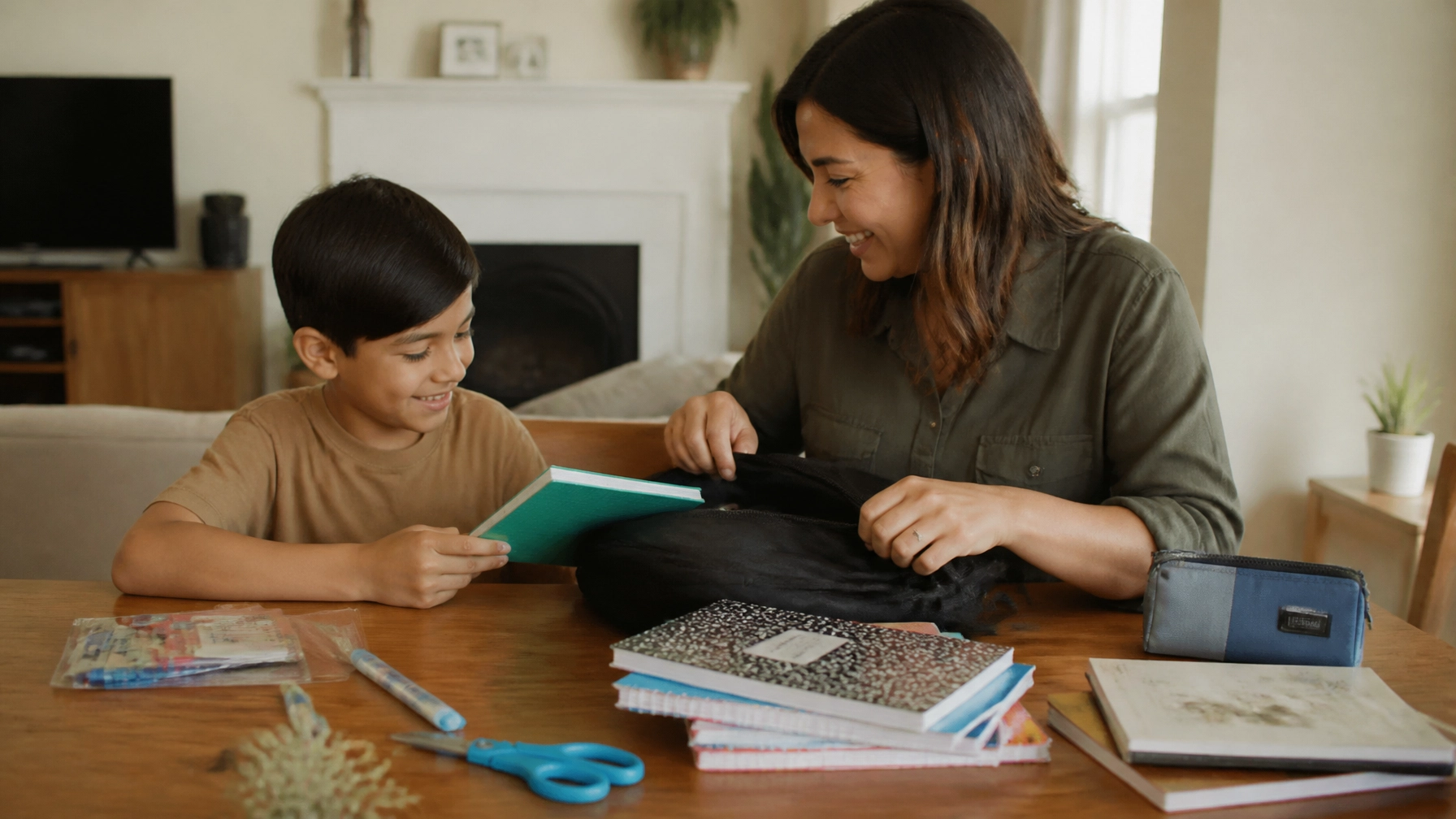
As the late summer warmth gives way to the approaching cooler temperatures of early fall 2026, households across the country face a profound transitional period: the commencement of a new academic year. While autumn often symbolizes a fresh start, renewed social connections, and intellectual growth, it frequently precipitates significant psychological distress for children and adolescents. Clinical research consistently indicates that back-to-school anxiety is a prevalent developmental phenomenon affecting youths across the entire maturation spectrum: from early childhood through high school.
At Beyond the Storm Behavioral Health, we recognize that managing acute transitional anxiety requires a multi-layered, evidence-based approach. Serving individuals as young as three years old up through adolescence, adulthood, and beyond, our clinical practice emphasizes proactive intervention, developmental sensitivity, and systemic family support. Through comprehensive child counseling and specialized family therapy, we help parents and children navigate complex emotional landscapes with clinical precision and compassionate care.
Below is an exhaustive, expert-backed framework detailing seven systematic strategies to mitigate back-to-school anxiety and foster psychological resilience before the first bell rings.
1. Systematically Validate, Normalize, and Investigate Affective States
The foundational prerequisite for alleviating childhood anxiety is affective validation. When children express apprehension regarding the impending school year, caregivers must resist the urge to deploy immediate, dismissive reassurances such as “everything will be fine” or “you have nothing to worry about.” While well-intentioned, such colloquialisms invalidate the child’s subjective emotional experience, inadvertently signaling that their internal state is unacceptable or exaggerated.
From a clinical perspective, parents should adopt an inquisitive, non-judgmental stance:
- Elucidate Specific Stressors: Direct inquiries toward specific cognitive appraisals. Ask precisely what elements feel most burdensome: whether peer dynamics, academic rigor, educator interactions, or separation from primary caregivers.
- Normalize the Affect: Explicitly state that anxiety is a universal neurobiological response to novelty and uncertainty. Phrases such as, “It is completely normal to feel nervous when stepping into an unfamiliar environment,” restructure anxiety from an internal deficit into a manageable, shared human experience.
- Differentiate Cognition from Reality: Guide children in cognitive defusion exercises, helping them separate catastrophic catastrophizing thoughts (“Nobody will talk to me”) from objective, verifiable probabilities.
2. Re-establish Circadian Rhythms and Conduct Environmental Desensitization
Neurodevelopmental research emphasizes the profound connection between physiological homeostasis and emotional regulation. Abrupt shifts from unstructured summer schedules to rigid academic timelines frequently exacerbate somatic complaints (e.g., headaches, gastrointestinal distress) and psychological vulnerability.
To counteract this, families should implement structured environmental adjustments well in advance of the academic term:
- Gradual Circadian Realignment: Shift nocturnal and diurnal schedules incrementally by fifteen to thirty minutes earlier every few days, ensuring optimal sleep hygiene necessary for emotional regulation in children and adolescents.
- In Vivo Rehearsal: Conduct systematic desensitization by visiting the school campus prior to the first day. Walking the physical perimeter, locating designated classrooms, navigating cafeterias, and reviewing drop-off zones reduces amygdala activation through familiarization with novel stimuli.
- Simulated Morning Protocols: Rehearse the logistical morning sequence: wakening, hygiene, attire selection, and departure: under simulated conditions to mitigate executive function overload on day one.

3. Foster Perceived Agency Through Participatory Planning
Anxiety is fundamentally rooted in a perceived lack of control over internal and external environments. By systematically integrating children into logistical and organizational preparations, caregivers cultivate an internal locus of control and bolster self-efficacy.
- Collaborative Procurement: Involve children in selecting educational materials, uniforms, and organizational tools tailored to their developmental preferences.
- Visualized Daily Scaffolding: Co-create visual schedules or routine charts for younger children, while encouraging adolescents to utilize digital or physical planners. Visual predictability decreases anticipatory anxiety by establishing clear structural anchors for the day.
- Strengths-Based Reframing: Consciously balance transitional planning by prompting the child to articulate positive anticipatory factors: specific extracurricular interests, reunion with peers, or intellectual curiosity regarding particular subjects.
4. Deploy Evidence-Based Somatic and Cognitive Coping Mechanisms
Equipping children with actionable, self-regulatory psychotherapeutic tools empowers them to manage acute autonomic arousal independently. When anxiety triggers sympathetic nervous system activation (the “fight-or-flight” response), cognitive reasoning is temporarily compromised, necessitating somatic interventions first.
- Controlled Diaphragmatic Breathing: Teach physiological regulation techniques such as box breathing (inhale for four seconds, hold for four, exhale for four, pause for four) or $4\times4$ breathing to stimulate vagal nerve activity and reduce heart rate.
- Systematic Sensory Grounding: Utilize the 5-4-3-2-1 sensory grounding technique (identifying five visual objects, four tactile sensations, three auditory stimuli, two olfactory inputs, and one gustatory element) to anchor hyper-aroused children back into the present moment.
- Proactive “Cope-Ahead” Planning: Collaborate with the child to formulate specific behavioral scripts and action plans for high-anxiety scenarios, such as entering a crowded hallway or initiating a conversation with a peer.
5. Shape Adaptive Behavior and Mitigate Avoidance Reinforcement
Behavioral psychology demonstrates that avoidance behavior negatively reinforces anxiety. When a child successfully avoids a feared stimulus (such as staying home from school due to somatic complaints), immediate relief temporarily reduces distress, but it fundamentally strengthens the phobic cycle, making subsequent attendance significantly more difficult.
- Maintain Uncompromising Consistency: Communicate with calm, unwavering conviction that regular school attendance is a non-negotiable family expectation.
- Implement Graded Exposure: If school refusal is severe, break the return process down into micro-steps: initially driving to the parking lot, progressing to walking to the front doors, and eventually entering the primary classroom under clinical guidance.
- Contingency Management: Reinforce adaptive bravery rather than absolute lack of fear. Praise and validate incremental acts of courage, utilizing positive reinforcement systems for successful daily transitions.

Schedule a free 15-minute call to see if we are a good fit.

Contact Us
