
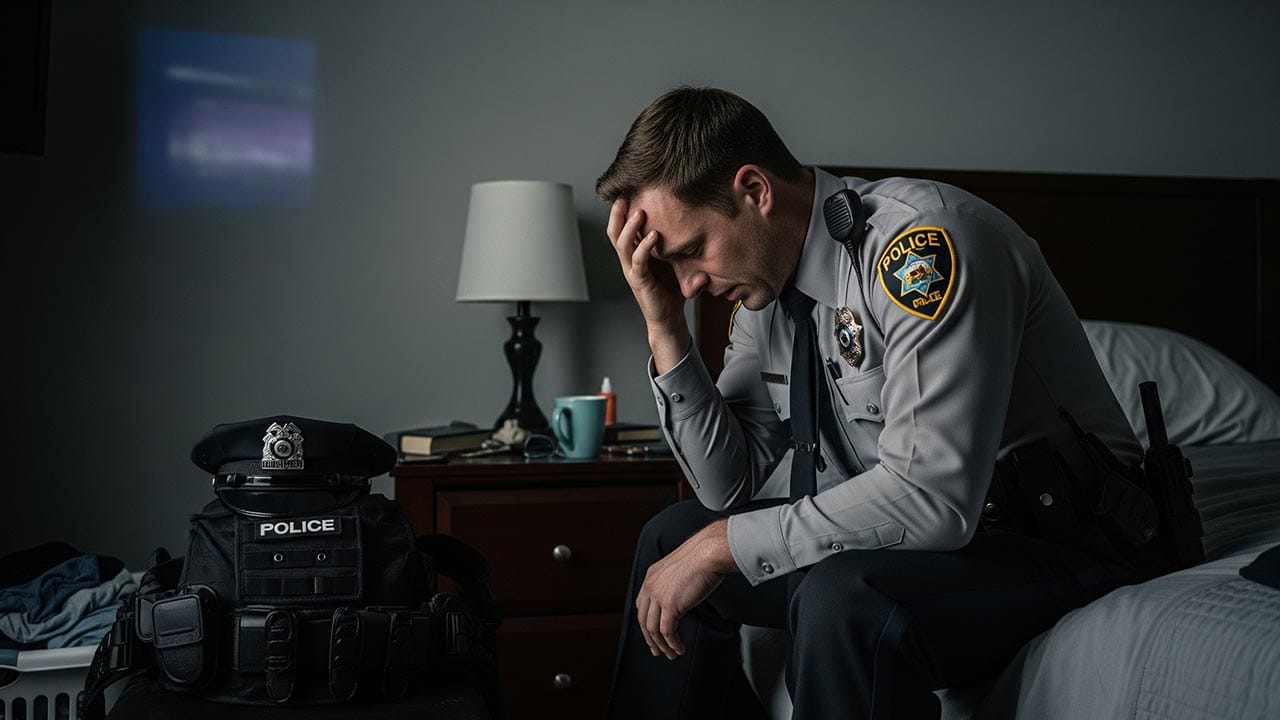
For first responders, the words “I’m not okay” can feel almost impossible to say.
Police officers, firefighters, emergency medical technicians, paramedics, dispatchers, and other public safety professionals are trained to remain focused during crisis. You respond when others are afraid. You make decisions under pressure. You continue working after difficult calls, loss, violence, injury, and tragedy.
That training is valuable on the job. It can also make it difficult to recognize when your own nervous system and emotional health need support.
Saying “I’m not okay” is not a failure of strength, commitment, or professionalism. It is accurate information. It is the beginning of self-awareness. Most importantly, it is a complete reason to seek help.
First Responder Stress Is a Mental Health Concern: not a Personal Defect
First responders experience repeated exposure to potentially traumatic events. The impact may come from one especially disturbing incident, or it may develop through cumulative exposure over months and years.
Common experiences include:
- Responding to serious injuries, deaths, abuse, or violence
- Witnessing suffering involving children or vulnerable individuals
- Making life-and-death decisions with limited information
- Working long, irregular, or overnight shifts
- Managing chronic sleep disruption and physical exhaustion
- Carrying responsibility for patients, victims, coworkers, or members of the public
- Returning to ordinary family life after an extraordinary workday
The brain and body are designed to respond to danger. During an emergency, the stress response increases alertness, heart rate, muscle tension, and reaction speed. After the emergency ends, the nervous system needs opportunities to recover. When exposure is frequent or recovery is limited, the stress response can remain activated.
This may appear as irritability, emotional numbness, anxiety, depression, anger, nightmares, intrusive memories, difficulty concentrating, isolation, substance use, or a persistent sense of being “on edge.” Some first responders notice changes at home before they recognize them as mental health symptoms. A partner may observe withdrawal, sleep problems, or emotional disconnection. Children may notice that a parent seems unavailable or easily frustrated.
These responses do not mean that someone is weak. They indicate that the person’s system has been carrying more than it can sustainably process without support.
Research confirms the seriousness of this issue. A systematic review and meta-analysis of first responders found that approximately one-third endorsed stigma-related concerns about mental health care, while confidentiality and career consequences were among the most common fears. The peer-reviewed review published in Psychiatry Research also identified scheduling and uncertainty about where to seek help as practical barriers.
The Substance Abuse and Mental Health Services Administration has reported that first responders experience elevated rates of behavioral health concerns, including depression and post-traumatic stress symptoms. These findings establish an important point: needing help is a predictable occupational health concern, not a sign that someone is unfit for public service.
Why Asking for Help Can Feel Risky
Many first responders work in cultures that reward toughness, self-reliance, and emotional control. Those qualities can support effective performance during emergencies. However, when they become the only acceptable way to cope, they can create harmful pressure.
A first responder may think:
- “Other people have been through worse.”
- “I should be able to handle this.”
- “My department will see me differently.”
- “If I talk about it, I might lose my position.”
- “A therapist who has never done this work will not understand.”
- “I do not have time for therapy.”
- “If I start talking, I will not be able to stop.”
These concerns deserve a direct and respectful response. Mental health treatment is not intended to remove a first responder’s competence or identity. It is designed to help the person regain sleep, emotional balance, connection, focus, and control.
Confidentiality is also an appropriate subject to discuss before beginning care. A licensed therapist should explain how privacy works, what information remains confidential, and the specific legal limits to confidentiality. Employer-sponsored programs, including employee assistance programs, may have their own procedures. Asking questions about records, communication, billing, and reporting is not confrontational; it is responsible decision-making.
The Congressional Research Service report on first responder mental health identifies stigma, confidentiality concerns, and fear of professional consequences as significant obstacles to care. The solution is not to criticize first responders for having these concerns. The solution is to make mental health support trustworthy, culturally responsive, and accessible.
What Reaching Out for Therapy Can Look Like
Reaching out does not require having a diagnosis, a complete explanation, or a dramatic breaking point. Therapy can begin with one sentence:
> “Something has changed, and I do not know what to do with it.”
At Beyond the Storm Behavioral Health, the first steps are structured but individualized.
1. A brief consultation
A first conversation helps determine whether the provider and practice are a good fit. You can ask about experience with law enforcement, fire service, EMS, trauma exposure, shift work, confidentiality, and treatment approaches.
Beyond the Storm Behavioral Health offers a free 15-minute call to discuss fit and next steps.
2. An initial assessment
An assessment is not a test that you pass or fail. It is a clinical conversation about what you are experiencing and how it is affecting sleep, work, relationships, mood, and daily functioning.
You do not have to describe every traumatic event in detail during the first appointment. A skilled, trauma-informed clinician will respect your pace and avoid forcing disclosure before you are ready.
3. A collaborative treatment plan
Treatment may address immediate concerns first, such as sleep, anxiety, panic, anger, emotional shutdown, or relationship strain. Over time, therapy may also address trauma memories, avoidance, grief, moral injury, depression, or post-traumatic stress.
Evidence-based approaches may include:
- Trauma-focused therapy
- Cognitive behavioral therapy
- Eye Movement Desensitization and Reprocessing, or EMDR
- Skills-based approaches for emotional regulation and distress tolerance
- Individual, couples, or family therapy when relationships have been affected
Treatment does not erase professional experience or require a person to forget what happened. It helps the brain and body process experiences so they no longer control every part of life.

Therapy Can Protect Relationships, Not Just Individual Well-Being
First responder stress rarely affects only one person. Partners and family members may experience uncertainty, loneliness, conflict, or concern about changes in behavior. The first responder may also feel guilt about bringing work stress home or worry about burdening loved ones.
Couples or family therapy can provide a structured setting to address these concerns. It can help family members:
- Understand how trauma and occupational stress may affect behavior
- Communicate without blame or defensiveness
- Identify patterns of withdrawal, anger, or emotional disconnection
- Create practical boundaries between work and home
- Develop a plan for support during difficult periods
- Rebuild trust, closeness, and shared routines
You do not need to wait until a relationship is in crisis. Couples and family therapy can be part of early support and prevention.

A Practical Way to Decide Whether It Is Time to Reach Out
Consider contacting a mental health professional if any of the following have continued or intensified:
- Sleep disruption, nightmares, or exhaustion
- Unwanted memories or strong reactions to reminders
- Persistent irritability, anger, fear, sadness, or numbness
- Increased alcohol or substance use
- Avoidance of people, places, conversations, or activities
- Difficulty feeling connected to a partner, children, or coworkers
- Loss of interest in life outside of work
- Problems concentrating or making decisions
- A sense that you must remain constantly prepared for danger
- Thoughts that others would be better off without you
You do not need to meet a specific number of symptoms to deserve care. Distress is enough.
If making an appointment feels overwhelming, take one small step:
- Save a therapist’s phone number.
- Send an email asking about first responder experience and confidentiality.
- Schedule a consultation rather than committing to long-term treatment.
- Tell one trusted person, “I have been having a difficult time and may need support.”
- Ask your department or EAP what confidential options are available.
A wellness check can also be a low-pressure starting point. Beyond the Storm Behavioral Health provides First Responder Wellness Checks for individuals and organizations seeking proactive support.

“I’m Not Okay” Is a Professional Act of Honesty
First responders are expected to identify hazards before they become emergencies. Mental health deserves the same level of attention.
Acknowledging distress can prevent symptoms from becoming more severe. Early support can improve coping, relationships, sleep, decision-making, and long-term functioning. Reaching out also helps challenge the idea that silence is the only acceptable response to pain.
Beyond the Storm Behavioral Health provides trauma-informed, evidence-based counseling for first responders, trauma survivors, individuals, couples, and families. Our team understands that therapy must be respectful, practical, and free from judgment.
To learn more or request support, schedule an appointment, call 816-427-1337, or email admin@beyondthestormkc.com.
If you or someone you know is in immediate danger or thinking about suicide, call or text 988 for the Suicide & Crisis Lifeline. In an immediate emergency, call 911 or go to the nearest emergency department.
At Beyond the Storm Behavioral Health, we recognize that managing acute transitional anxiety requires a multi-layered, evidence-based approach. Serving individuals as young as three years old up through adolescence, adulthood, and beyond, our clinical practice emphasizes proactive intervention, developmental sensitivity, and systemic family support. Through comprehensive child counseling and specialized family therapy, we help parents and children navigate complex emotional landscapes with clinical precision and compassionate care.
Below is an exhaustive, expert-backed framework detailing seven systematic strategies to mitigate back-to-school anxiety and foster psychological resilience before the first bell rings.
1. Systematically Validate, Normalize, and Investigate Affective States
The foundational prerequisite for alleviating childhood anxiety is affective validation. When children express apprehension regarding the impending school year, caregivers must resist the urge to deploy immediate, dismissive reassurances such as “everything will be fine” or “you have nothing to worry about.” While well-intentioned, such colloquialisms invalidate the child’s subjective emotional experience, inadvertently signaling that their internal state is unacceptable or exaggerated.
From a clinical perspective, parents should adopt an inquisitive, non-judgmental stance:
- Elucidate Specific Stressors: Direct inquiries toward specific cognitive appraisals. Ask precisely what elements feel most burdensome: whether peer dynamics, academic rigor, educator interactions, or separation from primary caregivers.
- Normalize the Affect: Explicitly state that anxiety is a universal neurobiological response to novelty and uncertainty. Phrases such as, “It is completely normal to feel nervous when stepping into an unfamiliar environment,” restructure anxiety from an internal deficit into a manageable, shared human experience.
- Differentiate Cognition from Reality: Guide children in cognitive defusion exercises, helping them separate catastrophic catastrophizing thoughts (“Nobody will talk to me”) from objective, verifiable probabilities.
2. Re-establish Circadian Rhythms and Conduct Environmental Desensitization
Neurodevelopmental research emphasizes the profound connection between physiological homeostasis and emotional regulation. Abrupt shifts from unstructured summer schedules to rigid academic timelines frequently exacerbate somatic complaints (e.g., headaches, gastrointestinal distress) and psychological vulnerability.
To counteract this, families should implement structured environmental adjustments well in advance of the academic term:
- Gradual Circadian Realignment: Shift nocturnal and diurnal schedules incrementally by fifteen to thirty minutes earlier every few days, ensuring optimal sleep hygiene necessary for emotional regulation in children and adolescents.
- In Vivo Rehearsal: Conduct systematic desensitization by visiting the school campus prior to the first day. Walking the physical perimeter, locating designated classrooms, navigating cafeterias, and reviewing drop-off zones reduces amygdala activation through familiarization with novel stimuli.
- Simulated Morning Protocols: Rehearse the logistical morning sequence: wakening, hygiene, attire selection, and departure: under simulated conditions to mitigate executive function overload on day one.
