
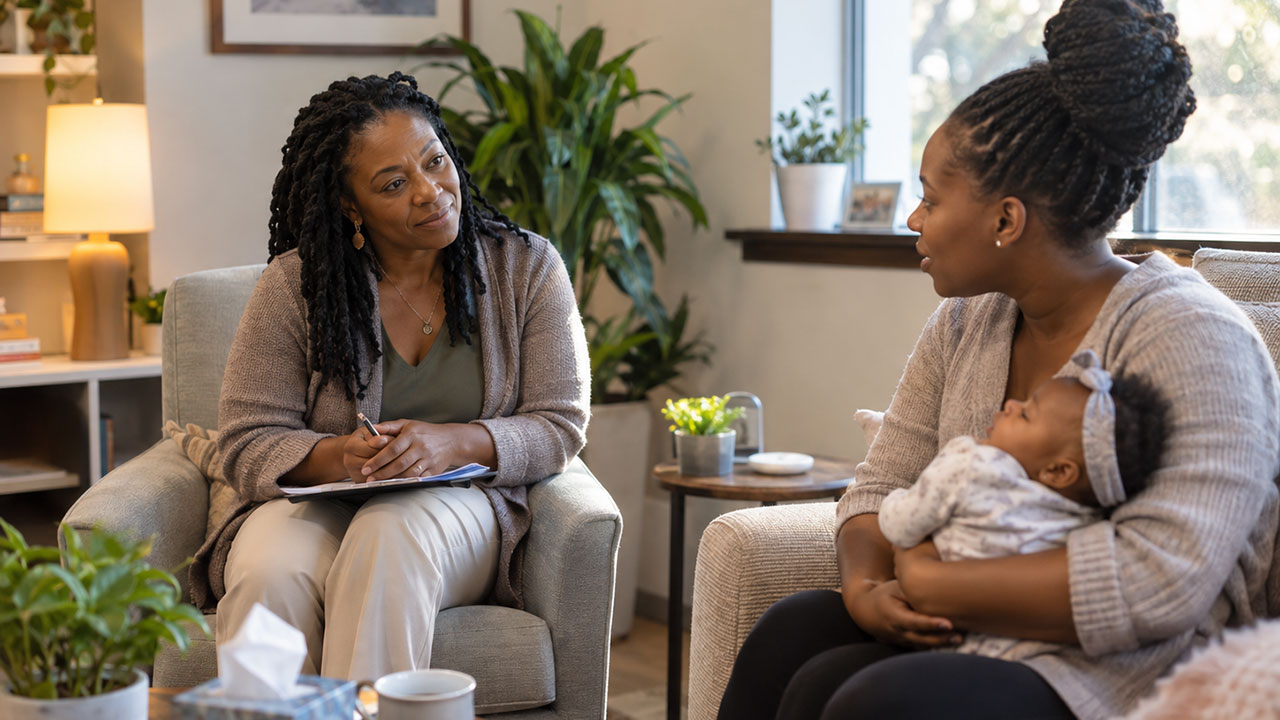
Ever since I became a mom just over a year ago, I began to notice experiences within my own mental health that highlighted a glaring reality: there is simply not enough attention paid to postpartum people, let alone pregnant people. As my journey through motherhood continued, and still continues to this day, I realized how important it was for me to either find the missing link or become the resource I felt I didn’t see enough of.
Seeing the Parallels in the Therapy Room
Once you go through a major life transition, as a therapist, you start to see the parallels within your clients. I started working with women who were pregnant or had kids around the age of my child, and I knew I wanted to understand them on more than just a personal level. I wanted to have the clinical knowledge and expertise to truly help them through this experience. It felt very heavy on my heart to seek out the right information so I could be exactly what these people need.
Elevating the Standard of Care with PSI
To bridge this gap, I recently began training through Postpartum Support International (PSI), which offers a comprehensive certification program for perinatal mental health. I recently completed the first portion of the training and plan to continue until I am fully certified as a PMH-C (Perinatal Mental Health Certified) professional. This certification allows pregnant or postpartum individuals to specifically find a clinician rigorously trained in this vulnerable area.
I am so excited to bring this knowledge into the therapy room. I think it is going to be incredibly valuable for our practice to offer this niche area of care, drawing in clients who need a safe, supportive space to heal.
Filling the Gaps in Perinatal Mental Health
We say maternal mental health is “underserved” because there are a lot of stories currently circulating about women’s mental health and perinatal care that are gaining negative attention. But amidst that, there are glimmers of hope. People are finally realizing how foundational mental health is for families and individuals becoming parents.
We need to use these stories to fill in the gaps and make maternal mental health a priority far beyond the standard six-week follow-up appointment after birth. We must recognize how long the experiences of postpartum depression, postpartum anxiety, and postpartum psychosis can impact people.
A Wealth of Resources for Every Family Dynamic
This is an area I find great passion in, both personally (as someone actively navigating life with a one-year-old) and professionally. I want to share the resources I’ve learned through PSI because they offer so much support that people are often unaware of.
PSI sets the gold standard for individuals and clinicians alike. And their resources are not just for new parents. They provide profound support for:
- People who have experienced pregnancy or infant loss.
- Individuals navigating the emotional toll of trying to conceive.
- Military families adjusting to parenthood with unique stressors.
They target specific family dynamics and emphasize a holistic balance, supporting both psychotherapy and pharmacology as vital forms of treatment for pregnant and postpartum people.
These monumental times of life are precious, but they can also be incredibly difficult. Being able to be a resource and a support system for parents during this time is deeply fulfilling.
Resources:
- Postpartum Support International (PSI): Learn more about perinatal mental health, find support groups, and access resources at postpartum.net.
Disclaimer: The information in this post is for educational purposes only and is not a substitute for professional medical or mental health advice, diagnosis, or treatment. If you are experiencing a medical or mental health emergency, please call 911, the National Suicide Prevention Lifeline (988), or proceed to the nearest emergency room immediately.
Get in touch with Jordyn Wood-Harris, LPC
Trauma & Life Transitions Therapist in Lee’s Summit, MO
Contact us today to schedule a consultation and take the first step toward supporting your growth, healing, and resilience.
- (816) 441-4285
- jordyn@beyondthestormkc.com
- 3540 NE Ralph Powell Road, Ste C Lee's Summit, MO 64064
Contact Us
Main Office
Lee's Summit (Satellite Office)